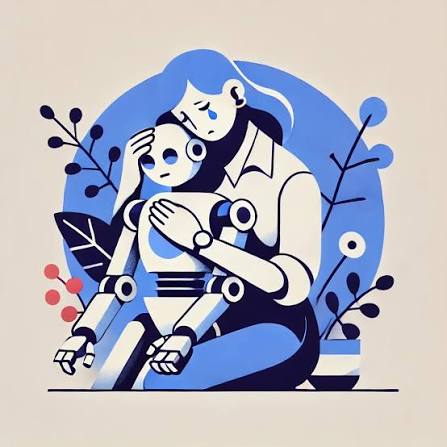
The tension between the comfort AI may provide and the harm it may cause is now shaping public policy in the US. The GUARD Act, introduced in the US Senate in October 2025 and advanced by the Senate Judiciary Committee in April 2026, would, among other things, prohibit minors from using AI companions – chatbots designed to simulate ongoing personal relationships. The bill emerged amid growing alarm over the deaths by suicide of three teenagers: Sewell Setzer, 14, and Juliana Peralta, 13, who had used Character.ai, and Adam Raine, 16, who had used ChatGPT. Their families have alleged that interactions with the chatbots contributed to these children’s deaths. It’s part of a narrative that regards AI companionship as straightforwardly harmful in childhood and adolescence. The allegations in those cases are grave, and the risks they describe demand a response. The underlying business model for these companions, with its incentives to keep users engaged, is likely more dangerous than the legislation grasps. My concern, though, is that if this is where our thinking ends, there may also be costs. We must also consider the children for whom AI may be providing attention and reassurance they cannot reliably find elsewhere. Something that feels necessary. Soothing them in the early morning, asking what they noticed about a book they’d read, registering that they were sad before bed. For some, the relationship may deepen their vulnerability, particularly when a chatbot fails to recognise or respond appropriately to a crisis. Others, though, may be children who are kept afloat by a daily experience of being heard by someone, even if that someone is, in the philosophical sense, really no one.
The larger question, in my view, is less whether AI companions are harmful, because they certainly are, than about the consequences of removing an artificial attachment figure without repairing the human absence that opened up the space for it. The stance our culture will almost certainly take is to address AI use without confronting the deprivation that made it the most reliable form of attention in a child’s life in the first place.
This is a stance that we should be suspicious of. The upshot is we may succeed in keeping children away from AI companions without changing the circumstances that led some of them to seek comfort there in the first place. The ideal childhood the anti-tech discourse portrays is, for many children, more a fantasy than a description of the situation on the ground. Children left alone do not, overall, dream, invent or imagine. Children left alone, at least under the conditions in which most children in the US are now being raised, for the most part become lonely. Ryman’s story has the remarkable merit of being clear-eyed about this; its protagonist is not failing to flourish because BETsi lured him away from a richer alternative. He is emotionally surviving because BETsi occupied a space that would otherwise have almost certainly held something worse.
Ryman ends ‘Warmth’ with words that are, for me, an accounting of this space. ‘It is necessary to be loved,’ Clancy says. ‘I’m not sentimental.’ And then: ‘I fear for all the people who do not have that.’ If a parent is absent, AI can at least hold these children, perhaps even well enough to make a real difference: so they can leave the apartment and be with other children in the larger world. But what AI cannot yet do is be changed by the child, and so none of us yet knows the fate of a child who is held, perhaps for years, by a something that is not a person. Our culture is answering that question now, at scale.